Birch Plywood in DIY Interior Projects

Material grades, finishing methods, and common applications in home furniture and panel projects in Poland.

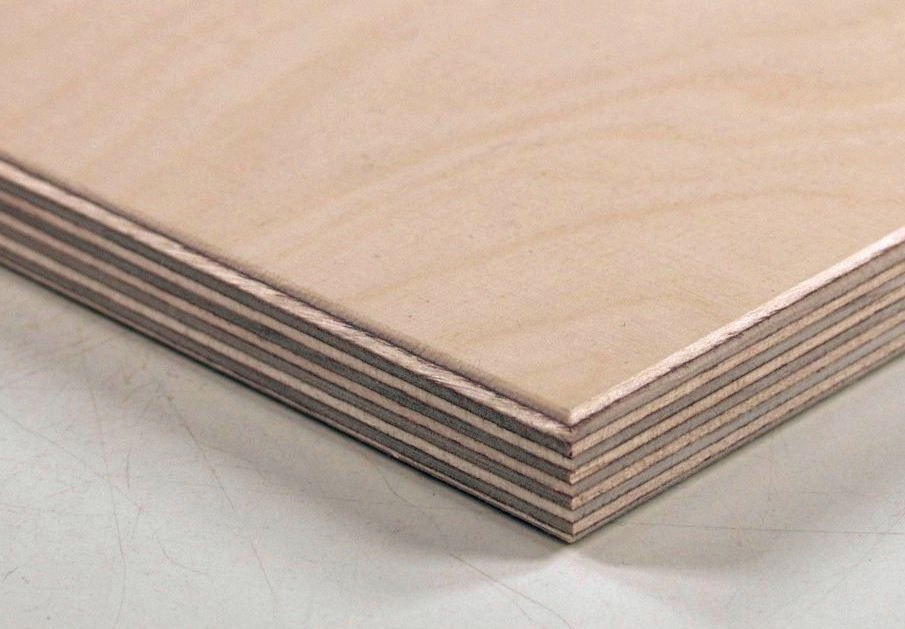
Cross-section of birch plywood showing multiple veneer layers

About Birch Plywood

Birch plywood is produced by bonding thin rotary-cut birch veneers under heat and pressure. The alternating grain direction between layers gives the panel its dimensional stability and resistance to warping — properties that make it a practical choice for flat-pack furniture, shelving units, and interior cladding.

In Poland, birch plywood is widely available through builders' merchants and specialist timber yards. Panels are sold primarily in the 2440 × 1220 mm format, with thicknesses ranging from 4 mm to 30 mm depending on application.

Quality is classified by face grade according to EN 636 and EN 635 standards. Understanding these grades helps in selecting the right panel for a given project without overspending on surface quality that will be covered or painted over.

Articles

Key Characteristics

Property Typical range (birch plywood) Relevance for interior use
Density 650–750 kg/m³ Heavier than softwood ply; relevant for shelf load calculations
Bending strength Higher than MDF/particleboard of equal thickness Suitable for spanning shelves without visible deflection
Formaldehyde emission E1 class (standard) or E0/F★★★★ E1 is the minimum for interior use under EU regulations
Moisture resistance Depends on glue class (INT / MR / WBP) Standard interior panels use INT glue; kitchen use may require MR
Face grade (EN 635) B / BB / CP / C B or BB face is suitable for natural-finish furniture

Data reflects commonly published specifications from European plywood standards (EN 636, EN 635, EN 717-1).